In brief
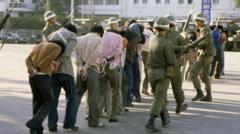
As South Korea grapples with the implications of President Yoon Suk Yeol's sudden martial law declaration, memories from past repressions loom large. Koh Jae-hak, an 87-year-old, shared haunting recollections of violence against peaceful demonstrators during protests in 1960, an era marked by dictatorial rule and martial law. The declaration, the first in 45 years, sent shockwaves across the nation; lawmakers rushed to counter the president's orders as citizens gathered to protect the parliament.
Yoon justified the martial law as a measure against "pro-North anti-state" forces. However, skepticism arose as no clear evidence was provided, leading many to suspect ulterior motives aimed at silencing political opposition. Historical experiences of brutal crackdowns during martial law—including the infamous Gwangju Massacre in 1980—fuel fears among South Koreans that democratic freedoms could be at risk. Younger citizens, while lacking direct experience of past repressions, are increasingly aware of the trauma strapped to martial law through family stories and cultural depictions. Emerging artists and filmmakers have brought past struggles to life, reminding the public of the hardships fought through to secure democracy. In sharp contrast, older generations reflect a complex relationship with martial law, some viewing it as a necessary evil for restoring order amid ideological chaos. Nevertheless, they collectively agree that the current times warrant no justification for such extreme measures, spurred by the nation's hard-earned democratic values. As the nation stands at the crossroads of history repeating itself, South Koreans remain vigilant, advocating for the preservation of the freedoms that were once wrestled away from them—an enduring legacy of their fight for democracy.