In brief
Mustapha Majiya grapples with the heartbreaking loss of his nephews and friends in one of Nigeria’s deadliest tanker explosions, prompting calls for improved safety standards and government action.
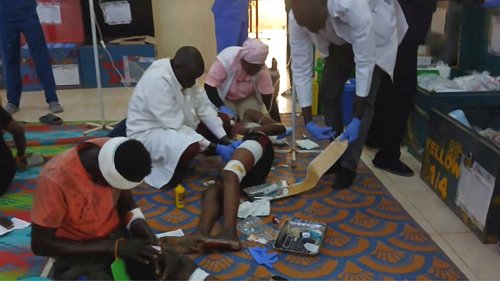
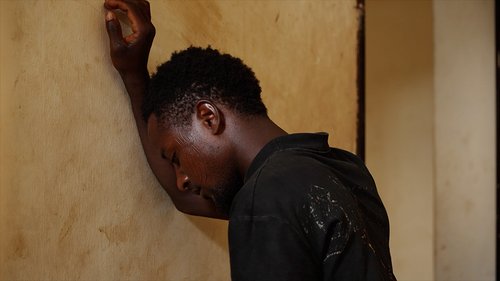
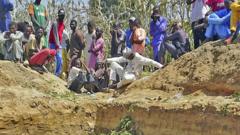
In the quiet town of Majia, Nigeria, tragedy unfolded this week when an overturned petrol tanker exploded, leaving nearly 170 people dead, including two young nephews of local farmer Mustapha Majiya and many members of his extended family. "My nephews, Nuradeen Rabiu, 16, and Dini Babalo, 17, died as they tried to stop individuals from approaching the tanker to scoop fuel before the explosion," expressed the grieving 50-year-old. The horrific incident, described as one of Nigeria’s most catastrophic tanker accidents in recent memory, occurred late at night on a poorly lit road in Jigawa state.Witnesses report a rush of locals, mostly youth and teenagers, eager to collect petrol from the tanker before the blast. Mr. Majiya notes the backdrop of soaring petrol prices—over 500% since the removal of fuel subsidies earlier this year—leading to a cost-of-living crisis that intensified the rush for free fuel. The situation escalated tragically as flames engulfed the area, claiming lives that included Majiya’s lifelong friend, Jamilu Maigaji, and many others who rushed to the scene, unaware of the deadly risks.Safety experts have called attention to a pattern in Nigeria's tanker-related accidents, arguing that preventative measures and better strategic planning could help mitigate such tragedies. Kola Ashiru-Balogun, an urban developer, emphasizes the need for investment in alternative transport modes rather than the over-reliance on road transport for petroleum products.Recent government statistics reveal that 2020 alone saw over 1,500 fuel tanker accidents, resulting in more than 530 deaths. Following this latest disaster, Nigeria's Senate has urged the National Orientation Agency to elevate public awareness regarding the dangers of approaching accident scenes, as Vice-President Kashim Shettima called for reflective action on preventative measures.However, critics argue that the issue lies not in weak policies but rather the failure to enforce existing regulations regarding tanker standards, driver training, and vehicle inspections. Timothy Iwuagwu, president of the Institute of Safety Professionals in Nigeria, points to the shoddy fabrication of tanks, saying, "The force of the tanker hitting the ground isn’t enough for an explosion—poor manufacturing is the real problem."The tragedy continues to loom over the community as they await promised government aid for survivors and the bereaved. Majiya reflects the community sentiment: “The people left behind in Majia are feeling very sorry after this incident… We await the government's assistance.” As Nigeria mourns alongside the affected families, calls are mounting for the government to strengthen protective measures against preventable disasters.