
In brief
In the wake of the recent shift in power, countless families in Syria hope to uncover the fates of relatives who disappeared during Bashar al-Assad's regime. Gruesome finds, including human remains in body bags, underscore the horrors of the past, while families sift through harrowing documentation, desperately seeking answers that may never come.
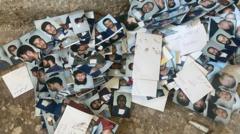
In Adra, a cemetery that once lay under the tight grip of Bashar al-Assad's forces, Khaled al Hamad has started an agonizing search for his two brothers, Jihad and Hussein. A concrete slab, recently disturbed, has led him to a shallow grave, which he believes may hold the remains of countless victims, including his missing kin taken by Assad's air force intelligence a decade ago. The skeletal remains found therein speak to a history of brutality, leaving unanswered questions about the details of their torture or deaths, yet no evidence is needed to convince Khaled of the fate that befell his brothers.Khaled reflects on how disabling fear pervaded the area during Assad's regime—a time when simply stopping your vehicle could result in abduction. As the regime's fall evokes a new hope for families who have lived in anguish, human rights groups, such as Human Rights Watch, begin to investigate similar cases of remains unceremoniously discarded in bags across the country.The search for victims leads families to abandoned military installations, such as the Mazzeh airbase, now under the control of the rebel group Hayat Tahrir al-Sham (HTS). In chilling detail, HTS guards recount the torture mechanisms used by past regimes on the prisoners held there, while mothers weep over the uncertainty of their loved ones' fates as they sift through endless heaps of thumbed photos—each representing a life unaccounted for.The meticulous record-keeping of regimes past details the horror-infused bureaucracy that has characterized the Syrian conflict, revealing a systematic effort to erase individual identity amidst mass suffering. As families continue to scour through unstructured stacks of documents, their frustrations grow, urging the international community to take note of the ongoing plight.The remnants of war—a military base littered with the remnants of airstrikes—show the evolving power balance between Syrian factions. As hope lingers amidst devastation, younger generations strive to rewrite their narrative, far removed from the influence of foreign powers that have contributed to the conflict.In a symbolic act of defiance, young HTS fighters tear a portrait of Assad from its place, embodying the desire for a future free of the past horrors. But while Assad's departure presents opportunities for a new chapter in Syria, it also reveals the need to come to terms with the buried atrocities of its history—where closure remains an elusive goal for many.

