In brief
A firsthand look into Rio Tinto’s Greater Nammuldi mine reveals the cutting-edge use of driverless trucks designed to enhance safety and productivity, though challenges of human interaction with autonomous systems remain.
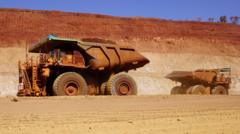
In the arid expanse of Narra, Western Australia, Rio Tinto's Greater Nammuldi iron ore mine is home to a fleet of massive, driverless trucks that redefine the future of mining. Situated approximately 1,600 kilometers north of Perth, this open-pit mine operates without permanent residents, relying on a rotating workforce of around 400 miners flown in for shifts of up to eight days. These colossal autonomous trucks, capable of transporting 300 tonnes of ore, navigate the red dirt roads of the mine without human drivers. During a recent visit, I experienced the sheer scale of these machines, which tower over my vehicle, while also becoming acutely aware of their autonomous capabilities. As I observed, one of the self-driving trucks made a sharp turn without a flaw, emphasizing the successful integration of technology into this challenging environment.The Greater Nammuldi mine utilizes over 50 self-driving trucks that operate on pre-set routes, supplemented by the recent introduction of an autonomous water cart known as "Henry," which helps manage dust-levels on the roads. The vehicle I rode in was equipped with a high-precision GPS system, enabling it to interact safely with the autonomous fleet by existing within a "virtual bubble." This technology ensures that autonomous trucks slow down or stop according to real-time vehicle positioning, greatly enhancing safety.Operations are coordinated remotely from an advanced Control Center (OC) located about 1,500 kilometers away in Perth. This center oversees approximately 360 self-driving trucks across multiple sites, along with an entirely automated long-haul rail system for ore transportation. Since the introduction of automation in the late 2000s, Rio Tinto has grown into a leader in mining technology, accounting for a significant portion of the world's autonomous truck fleet.The switch to autonomous mining has been largely motivated by the goal of enhancing worker safety, especially in a field known for its hazardous conditions. Managing director Matthew Holcz noted a noticeable decrease in incidents due to automation, alongside improved operational efficiency, with productivity soaring by 15% as trucks operate with minimal downtime.Despite fears of job displacement, the shift towards automation has not translated into widespread layoffs at Rio. Rather, long-time truck drivers have adapted to new roles in the OC or received training to operate different mining machinery. For instance, Jess Cowie, a former manual driller, now controls autonomous drills from a modernized setup, reaping the benefits of reduced noise and distance from her family.However, experts suggest that while automation facilitates significant advances in safety, there still remain areas for improvement. Robin Burgess-Limerick from the University of Queensland highlighted the need for better interface design to prevent staff from losing situational awareness. There are also concerns regarding operator workload and over-reliance on automation, pointing to the necessity for continuous improvement in safety protocols.Shane Roulstone of the Western Mine Workers Alliance echoed these sentiments, recognizing the advancements made by Rio Tinto but cautioning that eventual job reductions may occur as automated systems become even more entrenched.As Rio Tinto continues its technology-driven journey in mining, observers watch closely how these advancements can lead to a more efficient and safer industry. Observingly ironic is the complexity of human systems, revealed as flights from Nammuldi face cancellation, yielding a sudden demand for hospitality and accommodations that robots would easily circumvent. The contrast amplifies the intricate dance between human involvement and autonomous machinery in shaping the future of mining.