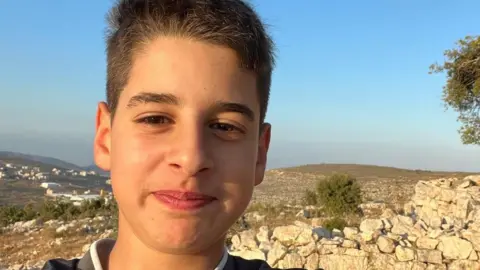
In the quiet village of Turmus Aya, nestled within the occupied West Bank, a tragic event unfolded on April 6, as Israeli forces reportedly shot and killed 14-year-old Amer Rabee, a Palestinian American born in New Jersey. His death has prompted widespread anger, underscoring deep-seated accusations surrounding the Israeli military's rules of engagement and their often lethal outcomes.
Scattered across a ridge framing a highway, personal belongings including a tattered black T-shirt, gray sweatpants, and sneakers lay abandoned amongst olive and almond trees — a stark reminder of the child who once wore them. Witnesses insist that Amer was simply picking almonds with friends when the incident occurred, countering the Israeli military's assertion that the boys were engaged in violent actions by throwing rocks at vehicles.
Responding to the military's statement, Amer's family stands firm in their belief that their son was not a threat, emphasizing the traumatic way in which Israeli forces returned his body, described by the family as riddled with bullets. This incident adds to a growing narrative of the Israeli military's alleged excessive force in the West Bank, amid a broader context of escalating violence against Palestinians during military raids and the actions of extremist settlers.
The implications of this event echo beyond the immediate tragedy, highlighting the urgent need for an examination of military accountability in conflict zones, especially concerning minors caught in the crossfire. Amer's shooting is emblematic of a broader cycle of violence that continues to spark indignation worldwide.