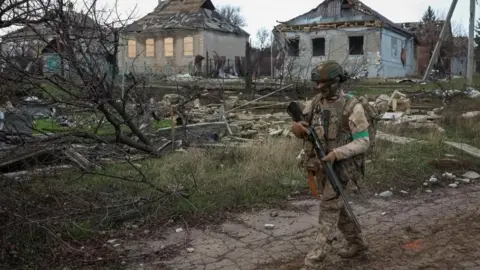
Mykola Zarutskyi is overwhelmed with grief as he revisits the remnants of his mother Liudmyla Zarutska's home after a devastating attack by a Russian Shahed drone on March 22. This horrifying incident underscores the stark reality of modern warfare and its impact on innocent civilians.
Liudmyla, affectionately known as Liuda, was preparing for retirement after a fulfilling career as a cleaning staff member at the Palace of Children and Youth in Kyiv. She had long anticipated more leisurely days as spring broke through winter, relishing coffee while watching news that painted a bleak picture of a country embroiled in conflict. Tensions were palpable, with rumors of a potential ceasefire, but the air-raid sirens became increasingly frequent, signaling imminent danger.
During her last conversation with Mykola, who lived
near the tense front lines in Sumy, the pair exchanged loving sentiments. Mykola insisted on visiting, but Liudmyla encouraged him to rest before starting his new job in Kyiv — a decision that, unbeknownst to her, likely saved his life.
Born shortly after WWII, Liuda represented the resilience of a generation enduring through strife and recovery. Her life, woven through decades of history, was characterized by love for her son, whom she raised in a nurturing environment filled with culinary delights and handcrafted creations. Her cherished sewing machine, an heirloom from her parents, was a symbol of her devotion, stitching together family memories as much as fabric.
As night fell on March 22, the allure of home turned into tragedy as the drone struck, taking away the life of an innocent woman. Mykola's anguish serves as a chilling reminder of the human toll in this ongoing conflict, illustrating how the echoes of war encroach on the most intimate sanctuaries of life.